Practice Session
Page 6 of 11
Using Pachinko (Marbles clone) as a clock. Topic from a session with Matthew.
A collection of SVG album cover illustrations generated by Claude Code — abstract interpretations of iconic electronic/ambient albums.
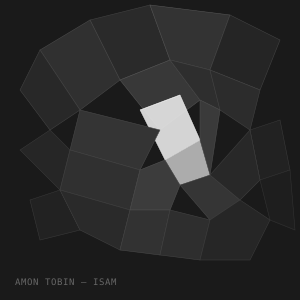 Amon Tobin — ISAM
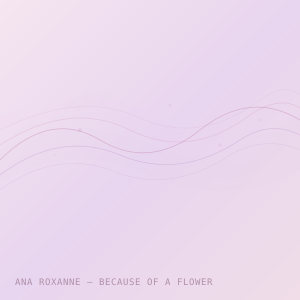 Ana Roxanne
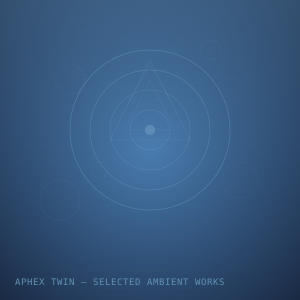 Aphex Twin — SAW
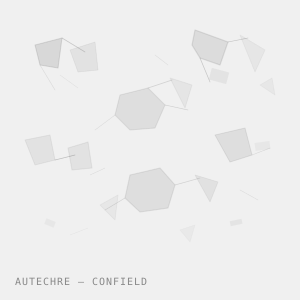 Autechre — Confield
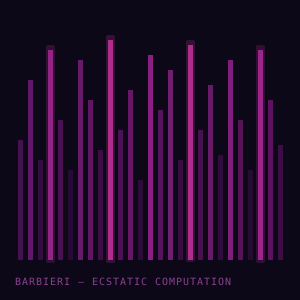 Barbieri — Ecstatic Computation
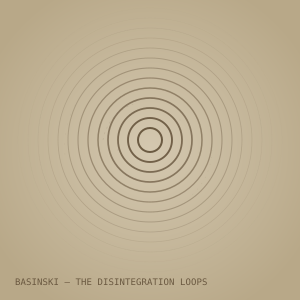 Basinski — Disintegration Loops
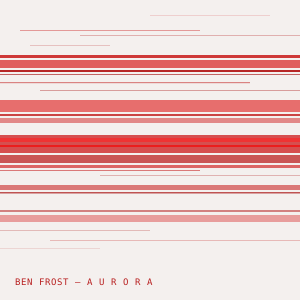 Ben Frost — Aurora
 Beverly Glenn-Copeland
 Charles Cohen
 Ciani — Buchla Concerts
 Cortini — Volume Massimo
 Deepchord — Hash-Bar Loops
 Emily Sprague
 Grouper — Ruins
 Hainbach
 Iasos
Iasos Joanna Brouk
 Julianna Barwick
 KAS — EARS
 Kelly Moran
 Laraaji — Radiance
 Lawrence English
 Loscil — Submers
 Mark Fell — Multistability
 Midori Takada
 Porter Ricks — Biokinetics
 Radigue — Trilogie
 Rhythm & Sound
 Sarah Davachi
 Stars of the Lid
 Suzanne Kraft
 Tim Hecker — Ravedeath
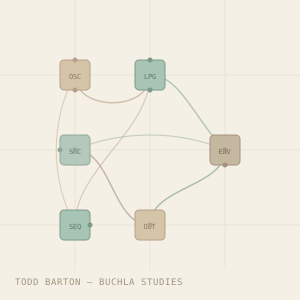 Todd Barton
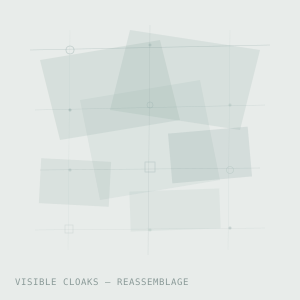 Visible Cloaks
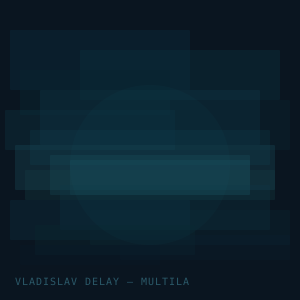 Vladislav Delay — Multila
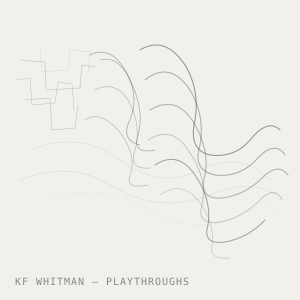 Whitman — Playthroughs
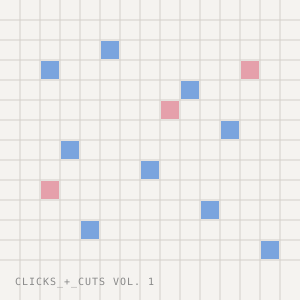 Clicks+Cuts Vol.1
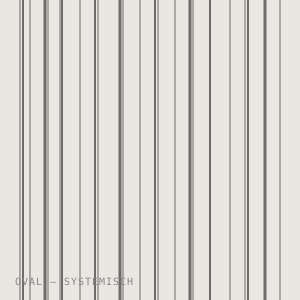 Oval — Systemisch
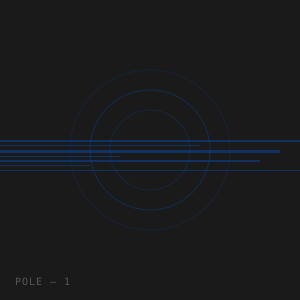 Pole — 1
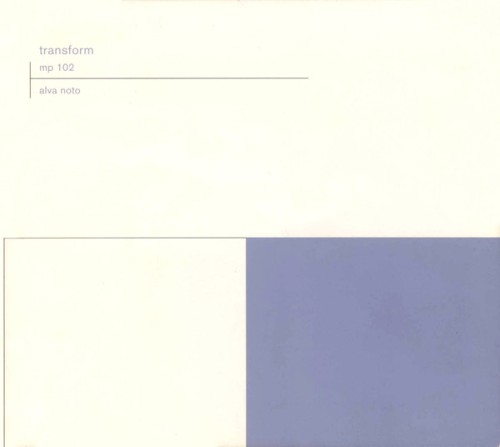
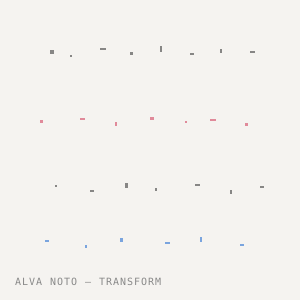 Alva Noto — Transform
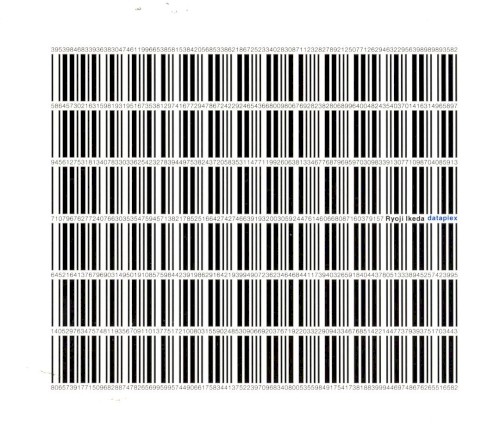
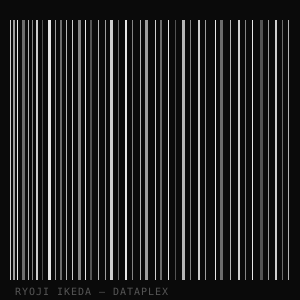 Ryoji Ikeda — Dataplex
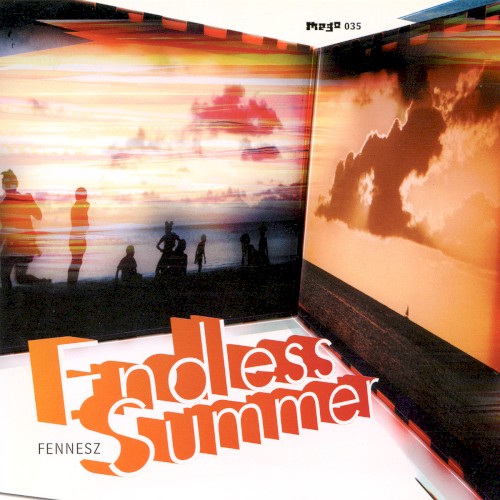
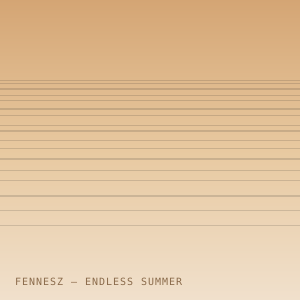 Fennesz — Endless Summer
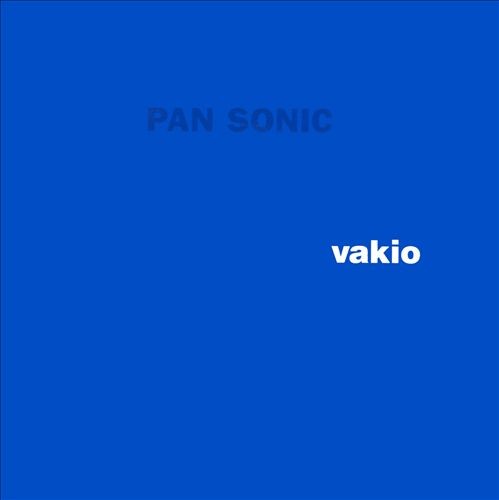
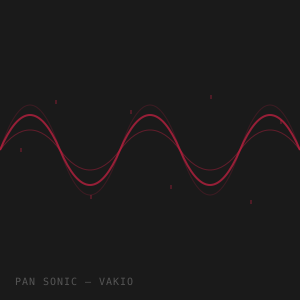 Pan Sonic — Vakio
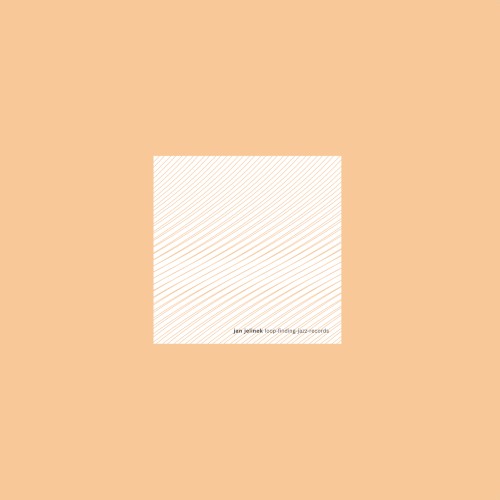
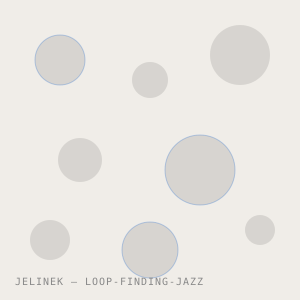 Jelinek — Loop-Finding-Jazz
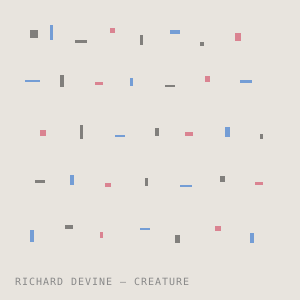 Richard Devine — Creature
 The core concept is elegant: a gate signal has a sharp transient attack followed by a sustain and release. By driving the QPAS’s radiate/resonance into self-oscillation, you can treat the filter itself as a pitched sound source, and then use the gate (often via an envelope) to excite it — like physically striking a tuned resonator.
The QPAS has a pair of bandpass filters in a stereo configuration with its unique Radiate parameter controlling the interaction between them. When you push Radiate high and increase Q (resonance), the filters approach and eventually enter self-oscillation — they ring at their cutoff frequencies like tuning forks.
A short trigger or gate sent to the audio input (or used to modulate the input level via a VCA) causes the filters to “ping” — they ring out at their tuned frequency and naturally decay. This is the same physics as hitting a bell or a drum: an impulse excites a resonant body, which then decays at its natural frequency.
Basic patch:
Kick drum: Tune QPAS low (60–100 Hz range), hit it with a short impulse, then modulate the cutoff frequency downward with a fast envelope (pitch drop is key for a convincing kick). The Zadar is great here — use one channel as the audio envelope, another for cutoff CV with a sharp initial peak that falls fast.
Tom / resonant thud: Slightly higher tuning, slower pitch envelope decay, moderate Q. The QPAS’s stereo bandpass character gives toms a rich spatial quality that mono filters don’t.
Hi-hat / snare-adjacent texture: Mix noise into the input, tune QPAS higher, use very short gate/envelope. Adjust Radiate to spread the stereo image — high Radiate creates a nice wash. Adding both cutoffs spread apart creates a more complex, metallic texture.
Clap / transient crack: Very short ping, fast envelope, mid-high frequency, high Q but not quite self-oscillating. The transient becomes the sound rather than the sustain.
Cowbell / metallic perc: This is where QPAS really shines. Because it has two filters, you can tune them to non-harmonically related frequencies (say, a minor 7th or minor 9th interval apart). The two pitches beating against each other create that characteristic metallic inharmonicity. Push Radiate to control how separated vs. blended they are.
The QPAS has dedicated CV inputs that make this really playable:
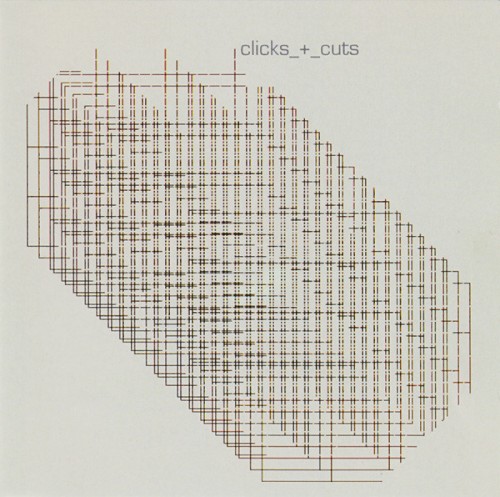
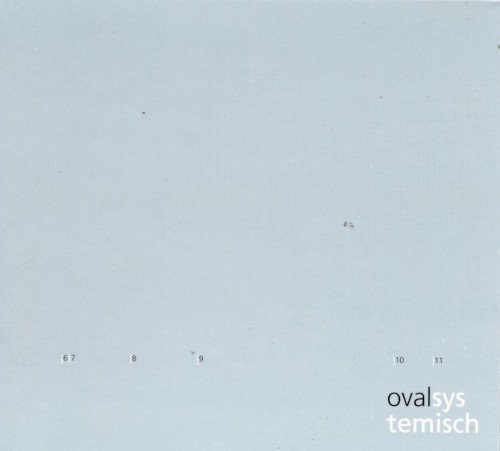
Deep dive into Clicks & Cuts — a movement in experimental electronic music where artists deliberately embraced digital errors, glitches, and sonic artifacts as primary creative material. Named after the Mille Plateaux compilation series (2000).
Microscopic clicks & pops, digital buffer glitches, extreme frequency exploration, pointillist textures, dub-influenced bass and space, granular clouds, and silence as a compositional element.
The original C&C movement was largely laptop/software-based — the modular world inherited and evolved the aesthetic as Eurorack exploded. These artists bridge the two worlds:
Notable hardware: Møffenzeef Mødular built Eurorack modules specifically for clicks & cuts style glitch percussion.
See the full Clicks & Cuts mood board for the complete timeline, discography, labels, and visual language reference.